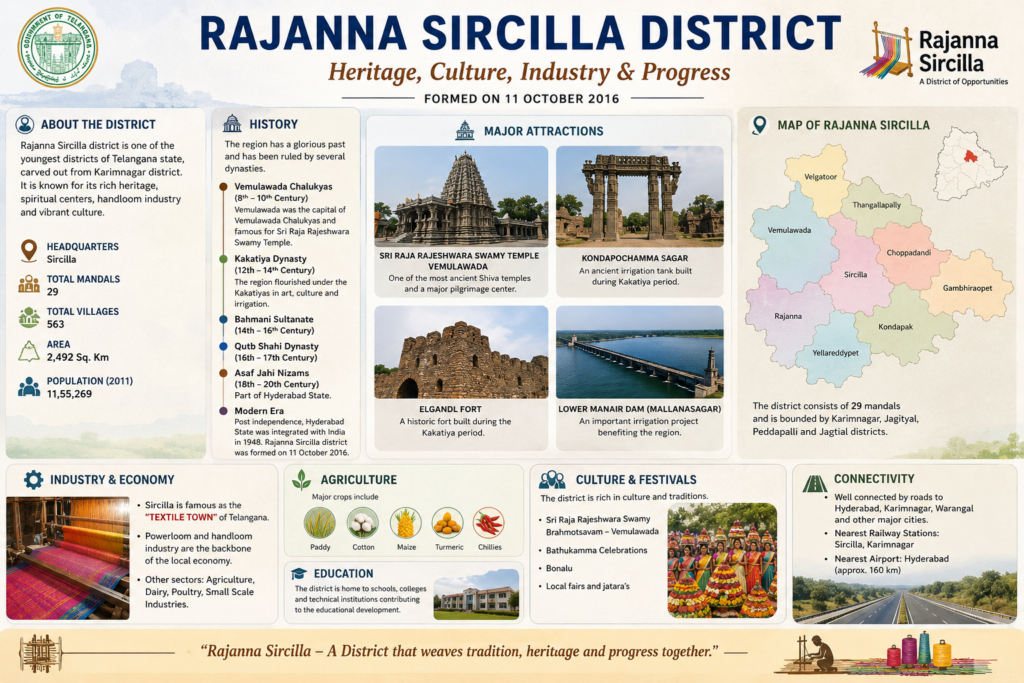
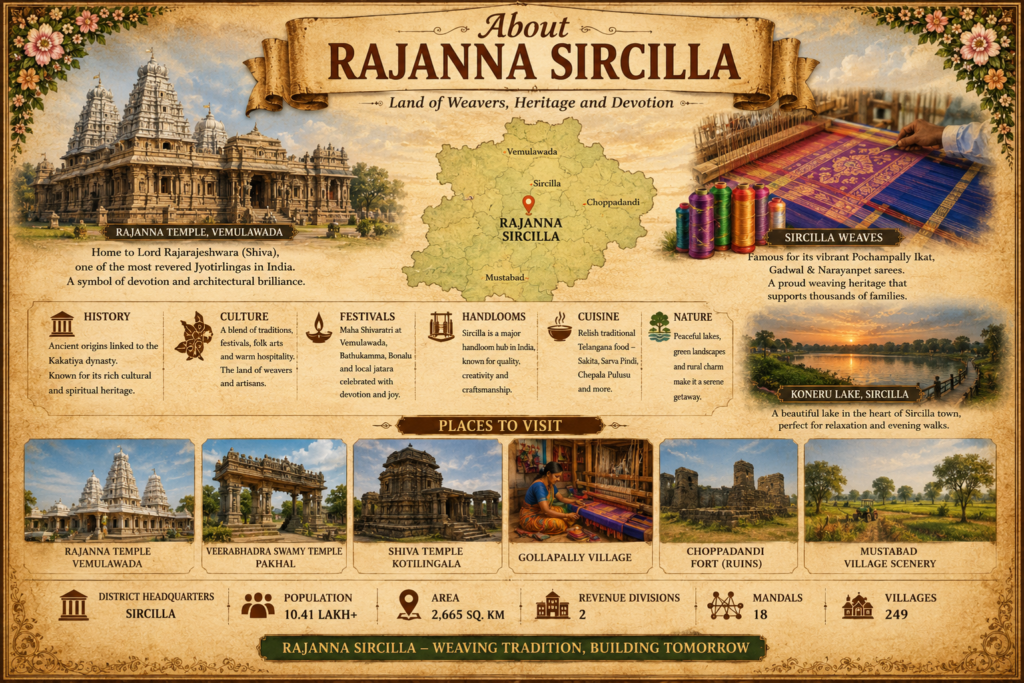
Rajanna Sircilla, carved out of the erstwhile Karimnagar district, is a vibrant region in Telangana that seamlessly blends industrial innovation with rich cultural heritage. Popularly known as the Textile Town” or textile capital of the state, its headquarters, Sircilla, houses a massive concentration of power looms and a developing mega textile zone driven by highly skilled weaving communities. The district derives its name from the historic Sri Raja Rajeshwara Swamy Temple in Vemulawada fondly called Rajanna which serves as a major spiritual hub and a unique symbol of communal harmony. Blessed by the flowing Manair River (a tributary of the Godavari) and modern irrigation projects, the district has also transformed into a flourishing agricultural belt, making it a critical center for both tradition and economic growth.
Rajanna Sircilla is a district in the Indian state of Telangana, known for its rich cultural heritage, thriving textile industry, and historical significance. The district was formed on 11 October 2016 during the reorganization of Telangana districts, with Sircilla serving as its headquarters. Popularly called the Textile Town of Telangana, Sircilla is home to thousands of power looms and handlooms, making textile.
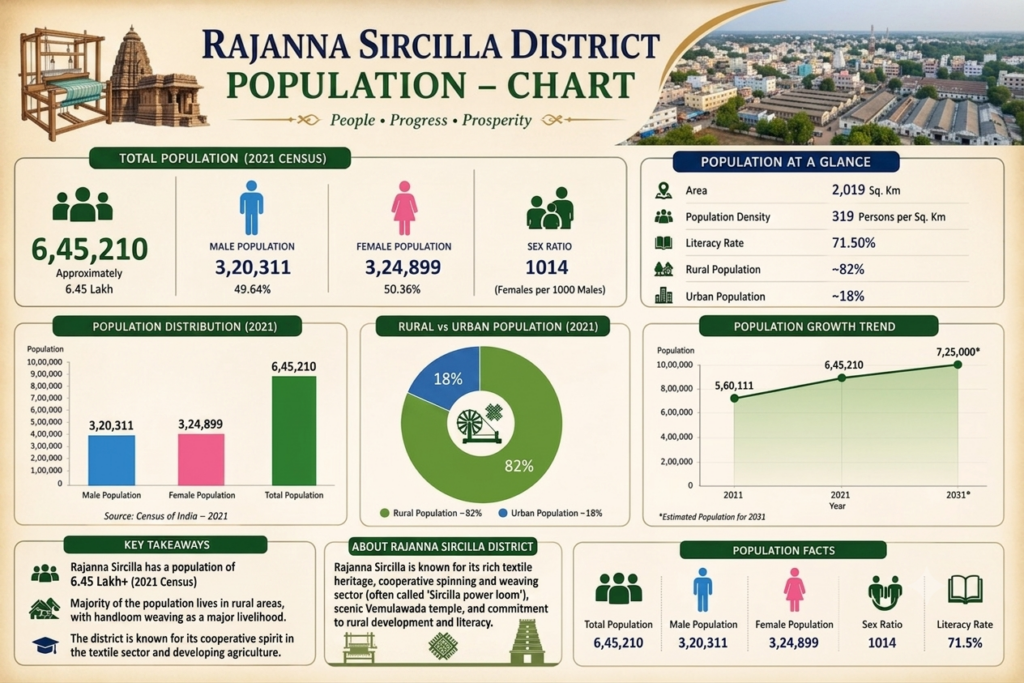
Rajanna Sircilla district has a total population of approximately 5.52 lakh people according to the 2011 Census of India. The district consists of both urban and rural communities, with agriculture and the renowned handloom weaving industry serving as the primary sources of livelihood. Over the years, Rajanna Sircilla has witnessed steady growth in education, healthcare, and infrastructure while preserving its rich cultural and religious heritage, particularly around the famous Vemulawada Rajarajeshwara Temple. The district continues to develop as an important textile and pilgrimage destination in Telangana.
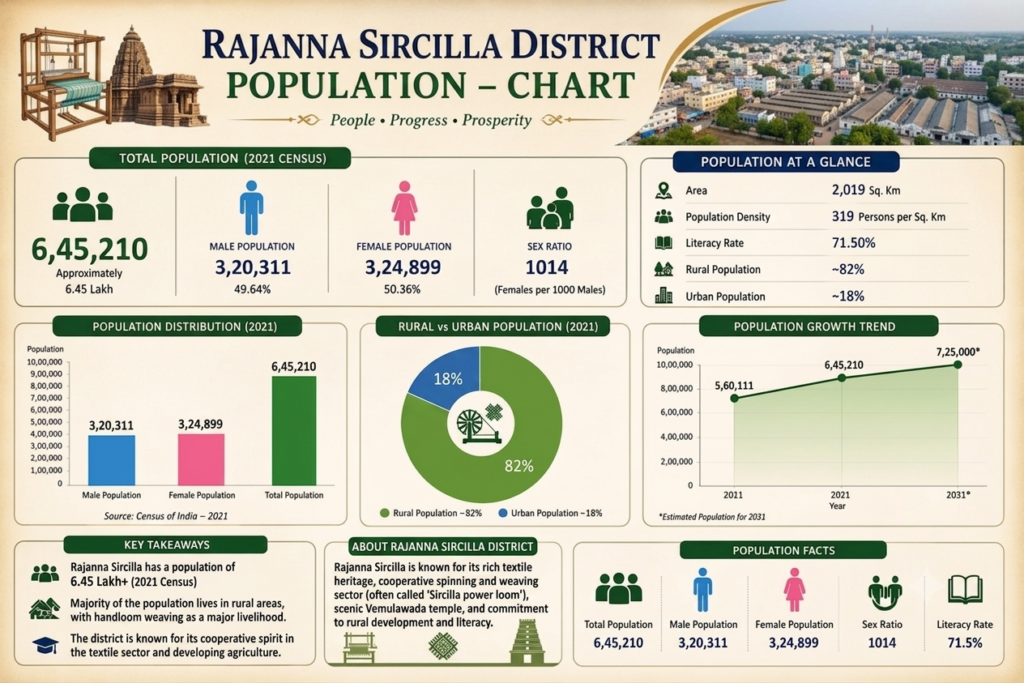
According to the 2011 Census of India, Rajanna Sircilla district has a total population of 5,52,037. Of this, 2,74,109 are males and 2,77,928 are females, resulting in a sex ratio of 1,014 females for every 1,000 males, which is higher than the national average. The district is predominantly rural, with 4,35,145 people (78.83%) living in rural areas, while 1,16,892 people (21.17%) reside in urban areas. The district has a population density of 273 persons per square kilometre and an overall literacy rate of 62.71%. These figures show that Rajanna Sircilla is largely an agriculture- and textile-based rural district with a balanced population distribution.

Male Population
2,74,109

Female Population
2,77,928

Sex Ratio
1,014 (Females per 1000 Males)
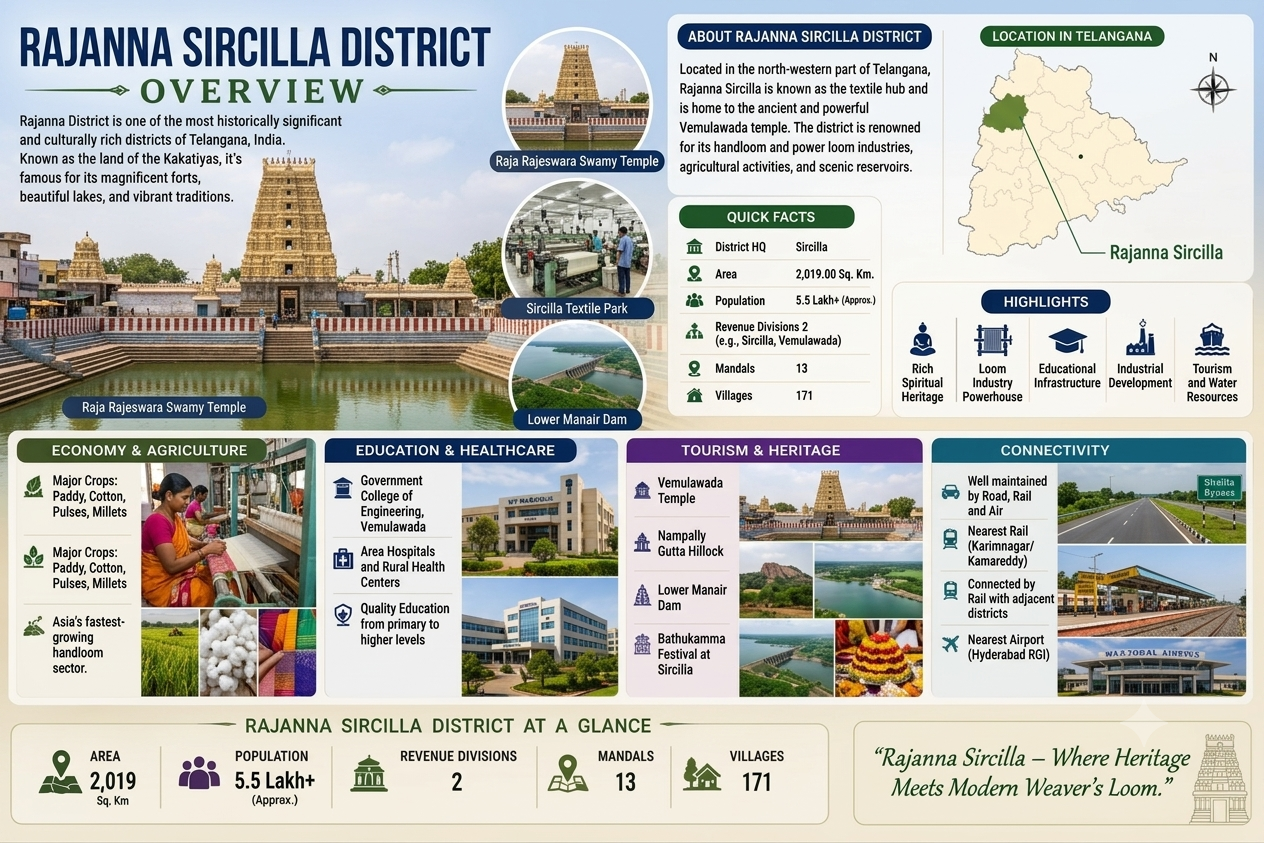
Rajanna Sircilla District – Statistics at a Glance
General Information
Date of Establishment: October 11, 2016
District Headquarters: Sircilla Town.
Historical Significance:Vemulawada Chalukyas
Cultural Status: Sri Raja Rajeswara Swamy Temple
Area & Geography
Total Geographical Area: 2,031 Sq. Km
Geographical Location: 18.38 latitude,78.83 longitude.
Average Elevation: 322 meters
Major Water Bodies: The Maneru River
Population Statistics
Total District Population: 5,46,121
Gender Demographics:
Male Population: 2,71,302
Female Population: 2,74,819
Sex Ratio: 1,013 females per 1,000 males
Administrative Statistics
Revenue Divisions: 1
Total Mandals: 13
Municipalities: 2
Gram Panchayats: 211
Revenue Villages: 171
Major Crops
Primary Crop: Paddy
Commercial: Cotton and Maize.
Horticulture & Animal Husbandry: Groundnut cultivation
Major Industries
The Textile Capital: Textile Town
Sircilla Textile Park: Located at Baddenapally,
Cooperative Framework: 120+ active Mutually
Apparel Sector: JUKI garment
Education Statistics
Overall District Literacy Rate: 62.71%
Male Literacy: 73.47%
Female Literacy: 52.17%
Infrastructure: Governed by over 540 schools
Healthcare Statistics
Primary Infrastructure:Government Medical College
Network Nodes: Fully operational Area Hospital at Vemulawada
Previous History of Rajanna Sircilla District
Rajanna Sircilla district has a rich historical and cultural heritage. The region was once part of the ancient Satavahana, Kakatiya, and Vemulawada Chalukya kingdoms. Vemulawada served as the capital of the Vemulawada Chalukyas between the 8th and 10th centuries and became famous for the Sri Raja Rajeshwara Swamy Temple, an important pilgrimage center. During later periods, the area came under the rule of the Bahmani Sultanate, the Qutb Shahis, the Asaf Jahi Nizams of Hyderabad, and finally became part of independent India after the Hyderabad State was integrated in 1948. Rajanna Sircilla district was officially formed on 11 October 2016 by reorganizing the erstwhile Karimnagar district in Telangana. Today, the district is well known for its historical temples, rich cultural traditions, and thriving textile industry, earning Sircilla the title of the “Textile Town” of Telangana.